
How To Shoot Amazing Black-And-White Photos On Your Iphone
How to shoot amazing black-and-white photos on your iPhone? It might sound like a simple question, but the answer lies in understanding the art of black and white photography, mastering your iPhone’s camera settings, and exploring the world with a new perspective.
Black and white photography strips away color, forcing us to focus on light, shadow, texture, and composition. It’s a way to see the world in a different light, and with a little practice, you can create stunning images that capture the essence of your subject.
From understanding the basics of light and shadow to using iPhone filters and editing apps, this guide will equip you with the knowledge and techniques to transform your iPhone into a powerful black and white photography tool. Whether you’re a seasoned photographer or just starting out, this guide will help you unlock the potential of your iPhone camera and create breathtaking black and white images.
Understanding Black and White Photography
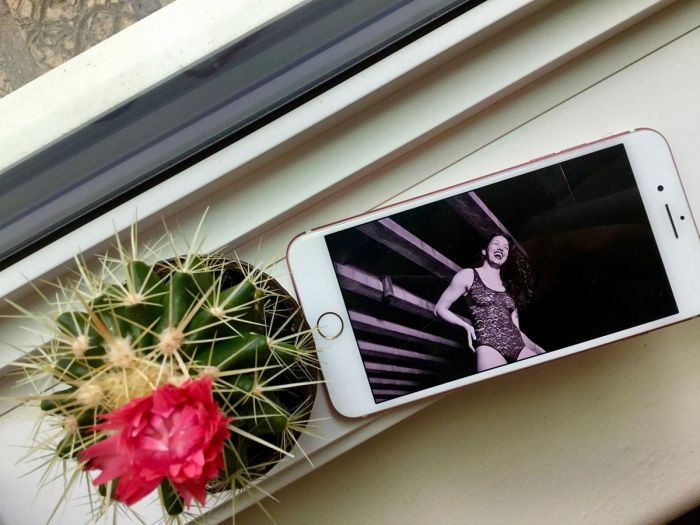
Black and white photography is a timeless art form that transcends the limitations of color, revealing the essence of a scene through light, shadow, and texture. It’s a powerful tool for expressing emotion, creating dramatic impact, and capturing the beauty of the world in a unique and evocative way.
The Unique Aesthetic of Black and White
Black and white photography possesses a distinct aesthetic that sets it apart from color photography. By eliminating color, the focus shifts to the interplay of light and shadow, creating a sense of depth, mood, and contrast. The absence of color also allows for a heightened emphasis on texture, detail, and form.
For example, the iconic photograph “The Migrant Mother” by Dorothea Lange captures the desperation and resilience of a mother during the Great Depression. The stark black and white tones, combined with the woman’s weathered face and the starkness of her surroundings, evoke a sense of profound emotion and social commentary.
The Importance of Light and Shadow
Light and shadow are fundamental elements in black and white photography, playing a crucial role in shaping the image and conveying mood. Light can be used to highlight specific areas, create depth, and emphasize texture, while shadow adds contrast and dimension, drawing the viewer’s eye to certain areas of the image.
The contrast between light and shadow is particularly important in black and white photography, as it creates a sense of drama and depth. For example, a photograph of a cityscape taken at sunrise or sunset will often have a high contrast between the bright light of the sky and the dark shadows cast by buildings, resulting in a visually striking image.
Examples of Iconic Black and White Photographs
The history of photography is filled with iconic black and white images that have shaped our understanding of the world. These photographs not only capture historical moments but also showcase the power of black and white photography to convey emotion, create impact, and inspire.
- “The Falling Man” by Richard Drew:This photograph, taken on September 11, 2001, captures a man falling from the World Trade Center during the terrorist attacks. The stark black and white image, combined with the subject’s tragic descent, is a powerful reminder of the human cost of the event.
- “The Steerage” by Alfred Stieglitz:This photograph, taken in 1907, captures a group of immigrants traveling to America in steerage class. The stark composition and the juxtaposition of light and shadow create a sense of both hope and despair, reflecting the immigrant experience.
- “The Kiss” by Robert Doisneau:This photograph, taken in 1950, captures a young couple kissing in the streets of Paris. The image is a classic example of black and white photography’s ability to capture a moment of intimacy and romance.
By studying these iconic photographs and analyzing their key elements, we can gain a deeper understanding of the power and beauty of black and white photography.
iPhone Camera Settings for Black and White Photography: How To Shoot Amazing Black-and-white Photos On Your IPhone
While your iPhone’s camera is already capable of capturing great photos, some settings can help you create stunning black and white images. Here’s how to optimize your iPhone camera settings for black and white photography.
Exposure
Exposure controls how bright or dark your photo is. To adjust exposure, tap on the screen where you want to focus, and a slider will appear. Slide it up to brighten the image, or down to darken it.
This will help you achieve the desired level of contrast in your black and white photos.
ISO
ISO determines how sensitive your camera sensor is to light. A higher ISO allows you to capture images in low light, but it can also introduce grain or noise. For black and white photography, you can often use a higher ISO to create a more dramatic look, adding texture and grain to your image.
You can adjust the ISO setting in the iPhone’s camera app by tapping the “f” icon.
Shutter Speed
Shutter speed controls how long the camera sensor is exposed to light. A faster shutter speed freezes motion, while a slower shutter speed allows for motion blur. In black and white photography, you can use shutter speed to create a sense of movement or stillness.
For example, a slow shutter speed can be used to create a blurry effect of moving water, adding an ethereal quality to your image. You can adjust the shutter speed in the iPhone’s camera app by tapping the “f” icon.
Using iPhone Filters
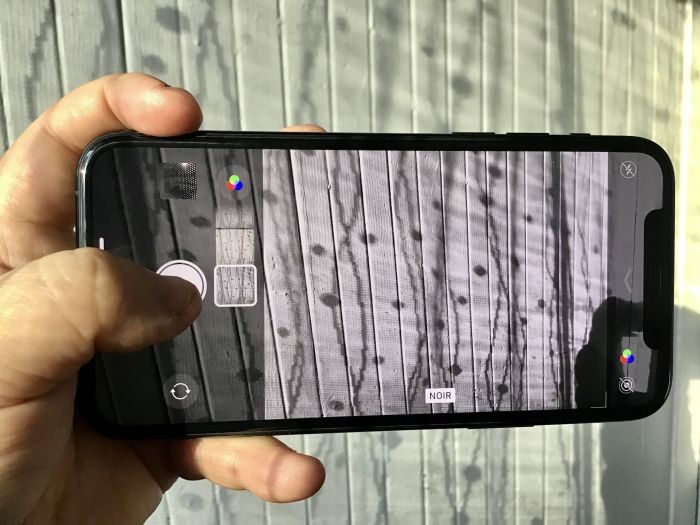
The iPhone’s camera app comes with built-in filters that can enhance your black and white photos. Some filters are specifically designed for black and white photography, such as “Mono” and “Noir.” Experiment with different filters to see how they affect your images.
You can access the filters in the iPhone’s camera app by tapping the “Filters” icon.
Composition and Framing Techniques
In black and white photography, composition is paramount. Since you’re working with a limited color palette, you need to rely on strong visual elements to create impact. This is where composition and framing come in. Think of these techniques as the tools that help you tell a story with your images.
Using the Rule of Thirds
The rule of thirds is a fundamental principle in photography that helps create balanced and visually appealing compositions. Imagine dividing your image into nine equal sections by drawing two horizontal and two vertical lines. The key is to position your subject or points of interest along these lines or at their intersections, rather than placing them directly in the center.
This creates a more dynamic and engaging composition, drawing the viewer’s eye around the image.
Utilizing Leading Lines
Leading lines are visual pathways that guide the viewer’s eye through the image. They can be created by anything from roads and fences to rivers and even shadows. These lines can lead the viewer to the subject, adding depth and interest to your composition.
Mastering Negative Space
Negative space refers to the empty areas around your subject. This space can be just as important as the subject itself, creating a sense of balance and allowing your subject to breathe. Too much negative space can make your subject feel lost, while too little can create a sense of claustrophobia.
Finding the right balance is key.
Employing Symmetry and Asymmetry
Symmetry creates a sense of order and balance, while asymmetry introduces a sense of dynamism and tension. Symmetry is achieved when both sides of an image are identical, while asymmetry is achieved when they are different. Both can be used effectively in black and white photography.
Symmetry can create a sense of tranquility and harmony, while asymmetry can create a sense of movement and excitement.
Framing Elements
Framing is a technique that uses elements within the scene to create a natural frame around your subject. This can be anything from a doorway or window to trees or branches. Framing can help to isolate your subject and draw the viewer’s attention to it.
It also adds depth and context to your image, telling a more complete story.
Lighting and Shadows
Lighting is the most important aspect of black-and-white photography, as it determines the contrast, mood, and overall feel of your image. Mastering the art of using light and shadows can elevate your black and white photos from ordinary to extraordinary.
Types of Lighting, How to shoot amazing black-and-white photos on your iPhone
Different types of lighting can be used to create distinct effects in black and white photography.
- Natural Light: This is the most readily available and versatile type of light. It can be used to create a wide range of moods, from soft and ethereal to dramatic and high-contrast.
- Golden Hour: The hour after sunrise and the hour before sunset, when the light is warm and soft, is particularly well-suited for black and white photography.
This light creates long shadows and a sense of tranquility.
- Overcast Days: Cloudy days provide a diffused, even light that is ideal for portraits and landscapes. The soft light minimizes harsh shadows and creates a more balanced image.
- Golden Hour: The hour after sunrise and the hour before sunset, when the light is warm and soft, is particularly well-suited for black and white photography.
- Artificial Light: This includes light sources like lamps, flashlights, and streetlights.
- Tungsten Light: The warm light from incandescent bulbs creates a yellow cast in black and white photos, which can be used to create a vintage or nostalgic feel.
- Fluorescent Light: This light is often cooler in tone and can create a more clinical or modern look.
Using Shadows to Create Depth and Mood
Shadows play a crucial role in black and white photography. They add depth, dimension, and mood to your images.
- High-Contrast Lighting: Strong light sources, such as the midday sun, create dramatic shadows. This type of lighting emphasizes the contrast between light and dark areas, resulting in a striking and powerful image.
- Think about a lone tree silhouetted against a bright sky.
The stark contrast between the dark tree and the bright sky creates a sense of isolation and drama.
- Think about a lone tree silhouetted against a bright sky.
- Low-Key Lighting: This type of lighting uses minimal light, creating a dark and mysterious atmosphere. The shadows are deep and enveloping, adding a sense of intrigue and mystery.
- A portrait taken in low-key lighting, with the subject’s face partially obscured by shadows, can create a sense of mystery and allure.
Taking killer black-and-white photos on your iPhone is all about finding the right light and composition. But you know what’s not cool? Running out of battery mid-shoot! To avoid that, try switching to Low Power Mode in Control Center – it’ll save your juice and let you capture those epic black-and-white shots all day long.
- A portrait taken in low-key lighting, with the subject’s face partially obscured by shadows, can create a sense of mystery and allure.
- Side Lighting: This technique involves placing the light source to the side of the subject, creating a strong shadow on one side. This type of lighting adds dimension and texture to the subject.
- A portrait taken with side lighting can emphasize the subject’s features and create a sense of drama.
Snapping killer black-and-white shots on your iPhone is all about finding the right light and composition. But if you’re editing those pics on your MacBook, you might want to check out how to Disable Turbo Boost to keep your MacBook cool.
It’ll help prevent your laptop from overheating, which is a total buzzkill when you’re trying to perfect your black-and-white masterpieces.
- A portrait taken with side lighting can emphasize the subject’s features and create a sense of drama.
How Lighting Affects Tone and Contrast
The type of lighting used can significantly affect the tone and contrast of a black and white photograph.
- Hard Light: Direct sunlight or a strong artificial light source creates harsh shadows and high contrast. This type of lighting produces a bold and graphic image.
- Imagine a portrait taken in the midday sun. The bright light will create deep shadows under the subject’s nose and chin, resulting in a high-contrast image.
- Soft Light: Diffused light, such as on an overcast day or when using a diffuser, creates softer shadows and lower contrast. This type of lighting produces a more subtle and ethereal image.
- Think of a landscape photograph taken on a cloudy day.
The soft light will create a more balanced image, with subtle shadows and a gentle, romantic feel.
- Think of a landscape photograph taken on a cloudy day.
Finding Inspiration and Subjects
So, you’ve got the technical stuff down, but where do you find the cool stuff to actually shoot? That’s where the fun part comes in. Finding inspiration for black and white photography is all about noticing the world around you in a new way.
It’s about seeing the beauty in the simple, the drama in the ordinary, and the character in the everyday.
Common Subjects for Black and White Photography
Black and white photography can bring out the best in certain subjects, highlighting their textures, shapes, and contrasts. Think about the subjects you find most interesting, and then consider how black and white could enhance their visual impact.
- Architecture: The stark lines and geometric shapes of buildings often translate beautifully into black and white. Look for interesting angles, shadows, and patterns. For example, a towering skyscraper against a cloudy sky, or a crumbling brick wall with peeling paint, can make for striking black and white photos.
- Portraits: Black and white photography can add a timeless quality to portraits. It emphasizes emotions and expressions, and can create a sense of depth and intimacy. For example, a close-up portrait of someone’s face, highlighting their wrinkles and lines, can tell a story in black and white.
- Landscapes: The dramatic contrasts between light and shadow, the textures of rocks and trees, and the vastness of nature all translate beautifully into black and white. For example, a misty mountain range, a rolling field of wheat, or a rugged coastline, can create powerful black and white images.
Finding Unique Subjects
You don’t have to go searching for the most dramatic landscapes or the most striking architecture to find compelling black and white subjects. Often, the most interesting photos are found in the ordinary.
- Look for patterns and textures: These can be found in everything from the grain of wood to the weave of fabric. Black and white can really bring out the details and beauty of these patterns. For example, a close-up shot of a weathered piece of wood, or a pile of old books, can be visually interesting in black and white.
- Pay attention to light and shadow: The way light falls on a subject can create dramatic shadows and highlights. Look for interesting contrasts, and see how the shadows shape the subject. For example, a street scene with a single spotlight illuminating a figure, or a window casting a shadow across a room, can make for compelling black and white photos.
- Embrace the abstract: Don’t be afraid to experiment with abstract compositions. Look for shapes, forms, and patterns that don’t necessarily represent anything specific. For example, a close-up of a piece of crumpled paper, or a shot of a tree branch silhouetted against the sky, can create interesting abstract images.
Editing Black and White Photos
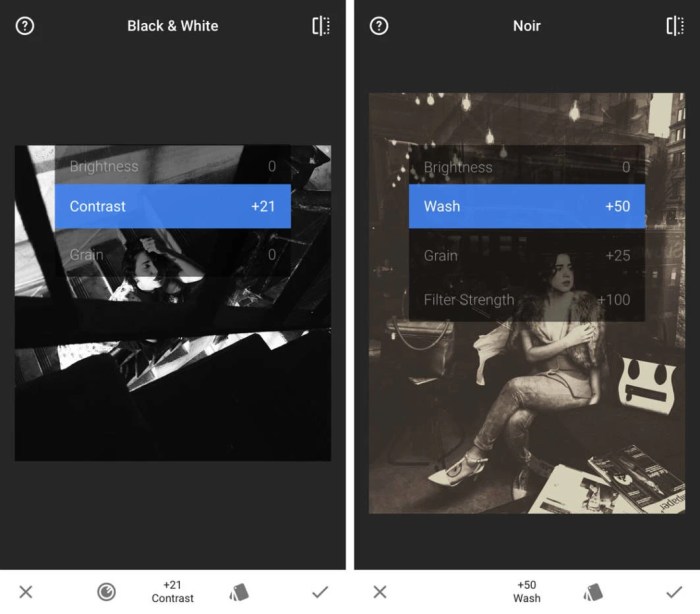
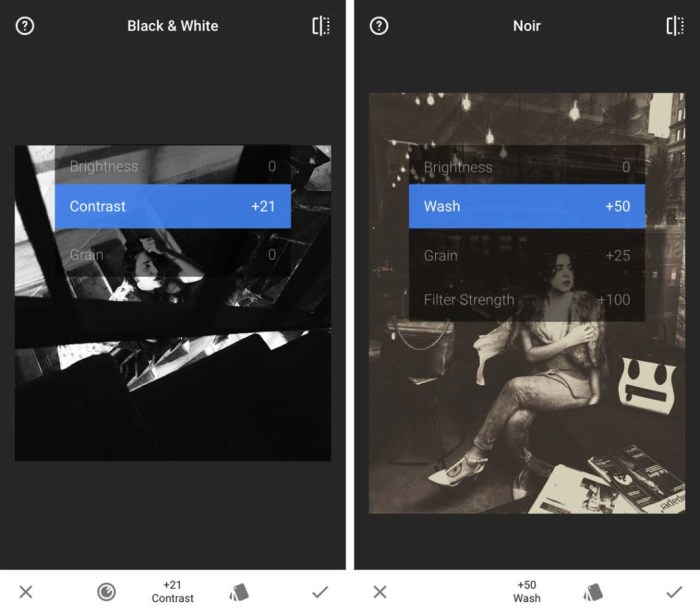
Okay, so you’ve got your killer black and white shots, but they need a little extra oomph, right? That’s where editing comes in! Editing your photos is like adding the finishing touches to a painting
it allows you to fine-tune your vision and make your images really pop.
Using Editing Apps
There are tons of great editing apps out there, but some popular choices for iPhone photographers are Adobe Lightroom and Snapseed. Both offer a ton of features to help you bring out the best in your black and white photos.
Adobe Lightroom
Adobe Lightroom is a powerhouse editing app, packed with tons of professional-level tools. It’s like having a mini photo studio in your pocket!* Pros:
Tons of features and flexibility.
Advanced tools for fine-tuning your images.
Offers both free and paid versions.
Cons
Can be overwhelming for beginners.
Paid version requires a subscription.
Snapseed
Snapseed is a more user-friendly option that’s great for both beginners and more experienced editors. It’s a super versatile app with a ton of tools to play with.* Pros:
Easy to use and learn.
Offers a wide range of editing tools.
Completely free.
Cons
Doesn’t have the same level of advanced features as Lightroom.
Adjusting Contrast, Brightness, and Tone
Now let’s talk about the basics of editing your black and white photos. Adjusting contrast, brightness, and tone is key to creating the mood and feel you want.* Contrast:Contrast is the difference between the lightest and darkest areas of your image.
Increasing contrast makes the blacks darker and the whites brighter, adding a dramatic feel. Think of it like turning up the volume on your image.
Brightness
Brightness controls the overall lightness or darkness of your image. Increasing brightness makes your image lighter, while decreasing it makes it darker.
Tone
Tone refers to the overall “feel” of your image. Adjusting the tone can create a warm, cool, or neutral look.
Emphasizing Textures, Details, and Mood
Editing tools can also be used to emphasize textures, details, and the overall mood of your black and white photos.* Textures:Using editing tools like “clarity” or “structure” can help bring out the textures in your image, adding depth and interest.
Think of it like adding a little bit of “grit” to your photo.
Details
Sharpening your image can help bring out details and make them pop. Be careful not to overdo it, though, as too much sharpening can make your image look artificial.
Mood
By adjusting the contrast, brightness, and tone, you can create different moods in your images. For example, high contrast and dark tones can create a dramatic or moody feel, while low contrast and lighter tones can create a softer, more ethereal feel.
Black and White Photography for Social Media
Black and white photography has a timeless appeal and can add a unique touch to your social media content. It can make your images stand out from the crowd and evoke a sense of nostalgia or drama. By understanding the nuances of black and white photography and applying some strategic techniques, you can elevate your social media presence.
Creating Visually Appealing Black and White Content
Black and white photography on social media is all about creating visually striking images that capture attention. Here are some tips to enhance your black and white content:
- Focus on Contrast:Black and white photography thrives on contrast. Look for scenes with strong light and shadow play. This creates a sense of depth and drama, making your images more captivating. For example, a portrait against a bright, white wall will create a high-contrast image, emphasizing the features of the subject.
- Play with Textures:Black and white photography highlights textures in a way that color photography often obscures. Capture images of rough surfaces, intricate patterns, or natural elements like bark or water. This adds visual interest and makes your photos more engaging.
- Experiment with Composition:Black and white photography encourages you to think differently about composition. Experiment with rule of thirds, leading lines, and negative space to create compelling images. For instance, a photo of a lone tree silhouetted against a sunset sky, with the tree positioned off-center, uses negative space effectively to draw the viewer’s eye.
- Utilize the Power of Simplicity:Black and white photography can be incredibly effective in simplifying a scene. Choose subjects with clean lines and minimal distractions. This creates a sense of clarity and allows the viewer to focus on the essence of the image.
For example, a photo of a lone figure walking along a deserted beach, with the focus on the figure’s silhouette, conveys a sense of solitude and contemplation.
Using Hashtags and Captions to Enhance Reach and Engagement
Hashtags and captions are essential for maximizing the reach and engagement of your black and white photos on social media.
- Use Relevant Hashtags:Hashtags help people discover your content. Research popular hashtags related to black and white photography, your subject matter, and your location. For example, if you’re posting a black and white portrait, use hashtags like #blackandwhitephotography, #portraitphotography, #monochrome, #bwphoto, and #photography.
- Create a Unique Hashtag:Consider creating a unique hashtag for your brand or your black and white photography series. This helps to unify your content and makes it easier for followers to find your work. For example, you could use #yournamebwphotography or #yourprojectbw.
- Write Engaging Captions:Captions are your opportunity to connect with your audience. Tell a story, ask a question, or share your thoughts about the image. Use descriptive language that evokes emotions and invites viewers to engage with your content. For example, you could write, “Lost in the quiet beauty of a winter morning.
#blackandwhitephotography #winterwonderland”
Black and White Photography Projects and Challenges
Now that you have a solid understanding of the fundamentals of black and white photography, it’s time to put your knowledge into practice. Engaging in projects and challenges can help you explore different aspects of this photographic style and push your creative boundaries.
Here are some ideas for projects and challenges that will help you hone your black and white photography skills:
Theme-Based Projects
Theme-based projects can help you develop a unique perspective and explore specific aspects of black and white photography.
- Urban Landscapes:Capture the stark beauty of cityscapes by focusing on geometric shapes, contrasting textures, and the interplay of light and shadow. Look for patterns, reflections, and interesting architectural details.
- Street Photography:Explore the human element in urban environments by capturing candid moments, interactions, and expressions. Look for interesting compositions, silhouettes, and the use of light and shadow to create mood and atmosphere.
- Nature and Wildlife:Capture the beauty and drama of the natural world in black and white. Focus on textures, patterns, and the interplay of light and shadow. Look for interesting compositions, such as a lone tree against a dramatic sky, or the intricate details of a flower.
- Abstract Photography:Experiment with abstract compositions by focusing on textures, patterns, and shapes. Look for interesting details, such as the texture of a wall, the patterns in a window, or the shapes of shadows.
- Portraits:Capture the essence of your subjects by focusing on their expressions, emotions, and personalities. Use light and shadow to create depth and dimension in your portraits.
Technical Challenges
Technical challenges can help you improve your skills and explore different aspects of black and white photography.
- High Contrast Photography:Experiment with high-contrast lighting to create dramatic images with deep blacks and bright whites. Use a strong light source to create dramatic shadows and highlights.
- Low-Light Photography:Capture images in low-light conditions using techniques such as long exposures and high ISO settings. Use a tripod to ensure sharp images.
- Silhouettes:Create striking silhouettes by placing your subject against a bright background and underexposing the image.
- Long Exposures:Use long exposures to capture movement and create ethereal effects.
Creative Challenges
Creative challenges can help you break out of your comfort zone and explore new ways of seeing the world.
Shooting black-and-white photos on your iPhone can be a super cool way to add a classic vibe to your pics. If you’re looking to up your game and record your iPhone screen to make a tutorial on how to get those killer black-and-white shots, check out How to Record Your Mac’s Screen For Free With QuickTime Player.
Once you’ve mastered that, you’ll be ready to create some seriously awesome black-and-white masterpieces.
- Photographic Storytelling:Create a series of black and white photographs that tell a story. Use your images to convey a message, evoke an emotion, or create a narrative.
- Black and White Only:Challenge yourself to only shoot in black and white for a week or a month. This will help you train your eye to see the world in shades of gray.
- Minimalism:Capture images that are simple and uncluttered. Focus on the essential elements of your subject and use negative space to create a sense of calm and tranquility.
- Black and White Photo Editing:Experiment with different black and white editing techniques to enhance your images and create unique looks. Use tools like contrast, brightness, and clarity to adjust the tones of your images.
Outcome Summary
So, grab your iPhone, explore the world around you, and let your creativity shine. With a little practice and a passion for capturing the world in black and white, you’ll be amazed at the stunning images you can create with your iPhone.
Don’t be afraid to experiment, play with different settings and compositions, and most importantly, have fun! The world of black and white photography is waiting to be discovered.
Questions and Answers
What are some good apps for editing black and white photos on my iPhone?
There are many great editing apps available, but some popular choices include Adobe Lightroom, Snapseed, VSCO, and Afterlight. Each app offers different features and tools, so it’s worth experimenting to find the one that best suits your style and needs.
Do I need a special lens to take black and white photos on my iPhone?
No, you don’t need a special lens. Your iPhone’s built-in camera is capable of capturing high-quality black and white images. However, if you’re looking to experiment with different perspectives or effects, you can explore external lenses designed for iPhones.
How can I improve the contrast in my black and white photos?
You can improve contrast by adjusting the exposure, highlights, and shadows in your editing app. Experiment with different settings to find the balance that best enhances the details and mood of your image.






 Hubungi Kami di WhatsApp